 Georgia Buzzard

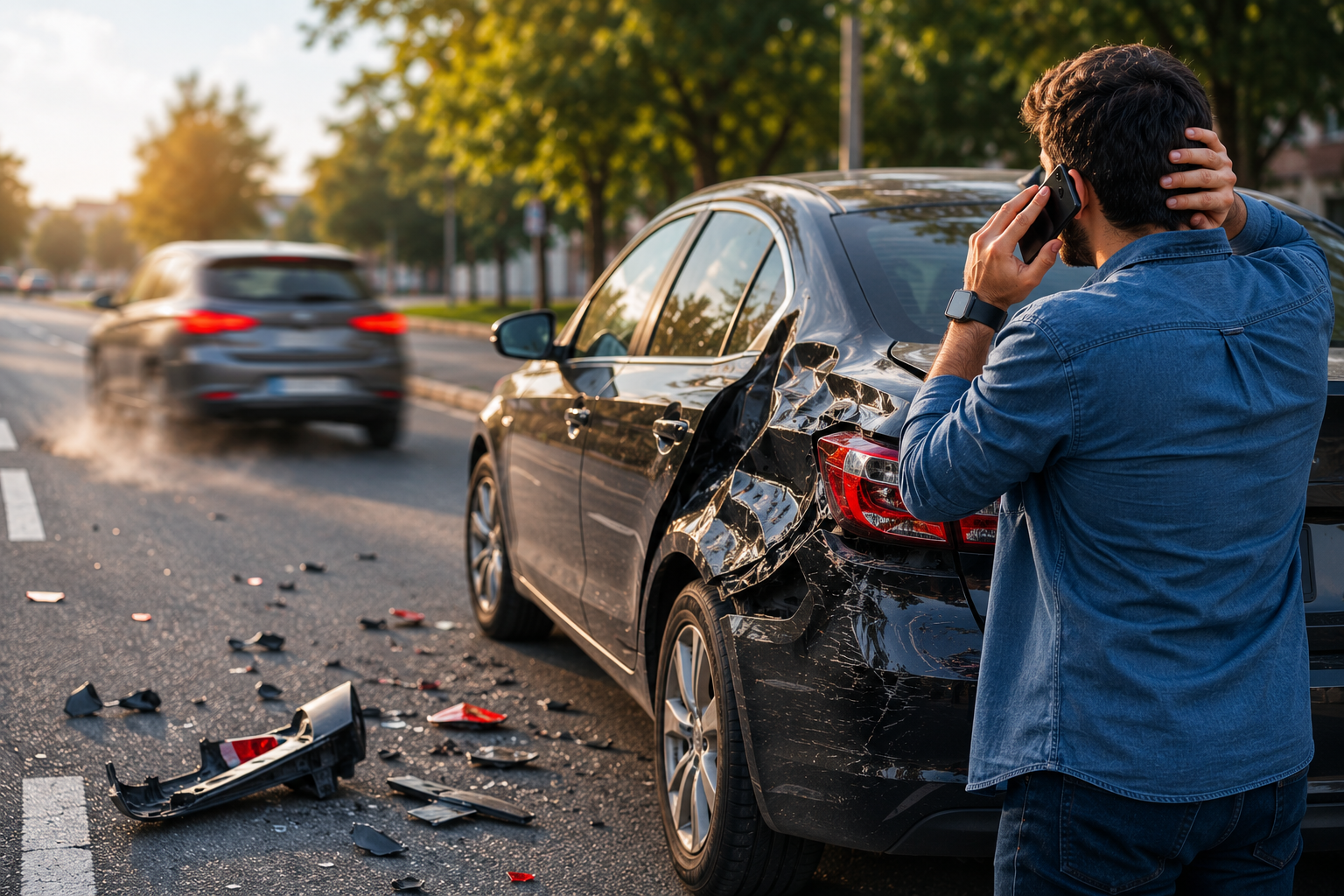
It’s one of the most unsettling things that can happen behind the wheel. Someone hits your car or worse, hits you while you’re walking or biking and then just drives away. No exchange of information, no accountability, just taillights disappearing around a corner while you’re left standing there trying to process what just happened.
The good news is that you may not have to pay for the damage entirely on your own. Depending on the coverage you carry, your own auto insurance policy may help cover repairs, medical expenses, and other losses even if the at-fault driver cannot be identified.
What Is Considered a Hit-and-Run?
A hit-and-run occurs when a driver involved in an accident leaves the scene without stopping to exchange information, provide assistance, or wait for law enforcement as required by law.
These incidents can involve another vehicle, a parked car, a pedestrian, a cyclist, or even damage to property such as a mailbox or fence. Whether the collision is minor or severe, leaving the scene is a criminal offense in every state.
Unfortunately, because the responsible driver cannot immediately be identified, recovering damages becomes more complicated than in a typical accident.
Why Hit-and-Run Accidents Create Insurance Challenges
Normally, when another driver causes an accident, their liability insurance pays for your damages. In a hit-and-run situation, however, there's no known insurance company to file a claim against because the responsible driver has disappeared.
That's where your own insurance coverage may become essential. Depending on your policy, certain coverages are specifically designed to protect you when the at-fault driver cannot be identified.
What Insurance Covers a Hit-and-Run?
The coverage available depends on your policy and state laws. Here are the most common protections that may apply:
- Uninsured Motorist (UM) Coverage:
This is the coverage most directly built for this exact situation. In most states, a hit-and-run driver is legally treated the same as an uninsured driver, since there's no way to verify or pursue their insurance. If you carry uninsured motorist coverage, it can pay for your injuries and, in many states, your vehicle damage when the at-fault driver can't be identified.
This connection between hit-and-run accidents and uninsured motorist protection is well established and explicitly addressed in most policies. If you want to understand exactly how this coverage works and what it protects against more broadly, our breakdown of Uninsured and Underinsured Motorist Coverage covers the details, including how it applies specifically to situations where the at-fault driver flees the scene.
- Collision Coverage:
If you don't carry uninsured motorist property damage coverage, or if your state's UM coverage doesn't extend to vehicle repairs, collision coverage is your next line of defense. Collision insurance pays for damage to your own vehicle from an accident with another vehicle or object, regardless of who caused it which means it applies even when the at-fault party disappears entirely.
The trade-off is that collision coverage comes with a deductible, so you'll pay that amount out of pocket before the insurance contributes the rest. Still, having collision coverage in place means a hit-and-run doesn't have to mean paying for the entire repair bill yourself.
- Personal Injury Protection (PIP) or Medical Payments (MedPay): These coverages can help pay medical expenses for you and your passengers regardless of fault, providing faster access to medical benefits after an accident.
What If You Only Have Liability Coverage?
If your policy only includes the state-required liability insurance, you may have little or no protection for your own vehicle after a hit-and-run.
Liability coverage is designed to pay for damage you cause to others—not damage to your own car. Unless you also carry uninsured motorist coverage or collision coverage, you could be responsible for repair costs yourself.
What Happens If the Driver Is Later Found?
Sometimes police investigations, witness statements, surveillance cameras, or dash cam footage help identify the fleeing driver after the accident.
If you've already filed a claim through your own insurer, the company may pursue reimbursement from the at-fault driver's insurance through a process called subrogation.
If successful, you may even recover your deductible. Separately, the driver may also face criminal charges for leaving the scene of the accident.
Steps to Take Immediately After a Hit-and-Run
Your actions immediately following the accident can significantly affect both the police investigation and your insurance claim.
- Stay at the scene and check for injuries instead of chasing the fleeing vehicle.
- Call the police immediately and obtain an official accident report.
- Gather as much information as possible, including the vehicle's color, make, model, partial license plate, and direction of travel.
- Speak with witnesses who may have seen the accident.
- Look for nearby security cameras or dash cam footage that may have captured the incident.
- Take photographs of the damage, accident scene, and any visible injuries.
- Report the accident to your insurance company promptly and provide the police report information.
Will a Hit-and-Run Claim Increase Your Insurance Rates?
This is a common worry, and the honest answer is: it depends, but generally less than you'd expect for an at-fault accident
Because you weren't at fault in a hit-and-run, many insurers treat these claims more favorably than claims where you caused the accident. Some states even have regulations preventing insurers from raising rates specifically because of a not-at-fault claim. That said, insurance companies vary in how they handle this, and filing any claim can sometimes still factor into your overall risk profile depending on your insurer and state.
If you're unhappy with how your insurer handles a hit-and-run claim whether due to rate increases, slow processing, or coverage disputes it’s worth knowing that switching providers afterward is generally possible. Our guide on whether you can switch car insurance after an accident walks through what to consider if you're thinking about shopping around following a claim like this.
How to Better Protect Yourself Before It Happens
The best protection against a hit-and-run starts long before an accident occurs.
- Review your uninsured motorist coverage to understand whether both bodily injury and property damage are included.
- Consider adding collision coverage if your vehicle would be expensive to repair or replace.
- Install a dash cam to improve the chances of identifying a fleeing driver.
- Understand your state's insurance requirements and reporting deadlines for hit-and-run claims.
Common Questions About Hit-and-Run Insurance Claims
Does uninsured motorist coverage protect pedestrians and cyclists?
In many cases, yes. Some uninsured motorist policies extend coverage even if you're struck while walking or riding a bicycle, though policy terms vary.
Will I still have to pay my deductible?
If you're using collision coverage, your deductible generally applies. Some uninsured motorist property damage coverages may have lower deductibles or none at all depending on your state's rules.
Is a police report required?
Most insurers strongly recommend filing one, and some states require a police report before uninsured motorist benefits can apply to a hit-and-run claim.
Final Thoughts
Being the victim of a hit-and-run can be both stressful and financially overwhelming, but it doesn't necessarily mean you're left without protection. Uninsured motorist coverage, collision coverage, and PIP or MedPay can all play an important role in helping cover your losses depending on your policy.
The best way to know you're protected is to review your policy now, before you ever need it. Compare car insurance options on QuoteConsumers to make sure your coverage includes the protections that matter most if the unexpected happens.
Because when the responsible driver disappears, having the right insurance protection can make all the difference in getting your life back on track.
All Categories
Recent Articles